What is visualization in chess, and why does calculation depend on it?

Visualization in chess is seeing a position that isn't on the board yet. The real board is in front of you. You move the pieces in your head on top of it, and you keep track of where everything ends up.
All chess calculation depends on it. You can find the right idea and still lose, because three moves in you put a piece on a square it already left.
Isn't that just blindfold chess? No, it is how you calculate
Blindfold chess asks you to hold the whole board from memory, with nothing to look at. In a game you never do that. You look at the real position and update it as you calculate. That's a different skill, and it is the one that wins games.
Blindfold chess training is a party trick goes into the difference.
Why does it decide games? Calculation needs it
In our count of 50,000 rapid and classical Lichess games, 61 of every 100 losses came from a tactic.
Plenty of those losses aren't about seeing far. The loser saw the position a move or two ahead wrongly, with a defender that wasn't there, a square they thought was covered or a piece they forgot had moved. Calculation built on a wrong picture fails, however far it goes.
Is visualization the weak spot in your calculation?
- You find the right idea, but the move doesn't work when you play it.
- In your head, a piece is still on the square it just left.
- You solve puzzles well when the pieces move, but miss the same patterns in games.
- You lose track of the position after a capture or a knight move.
How is it different from chess calculation?
Calculation is choosing which moves to look at and judging where they lead. Visualization is holding the board steady while you do it. You need both, but calculation breaks down the moment the picture does. The step-by-step calculation guide covers the first half.
How do you train it alongside calculation?
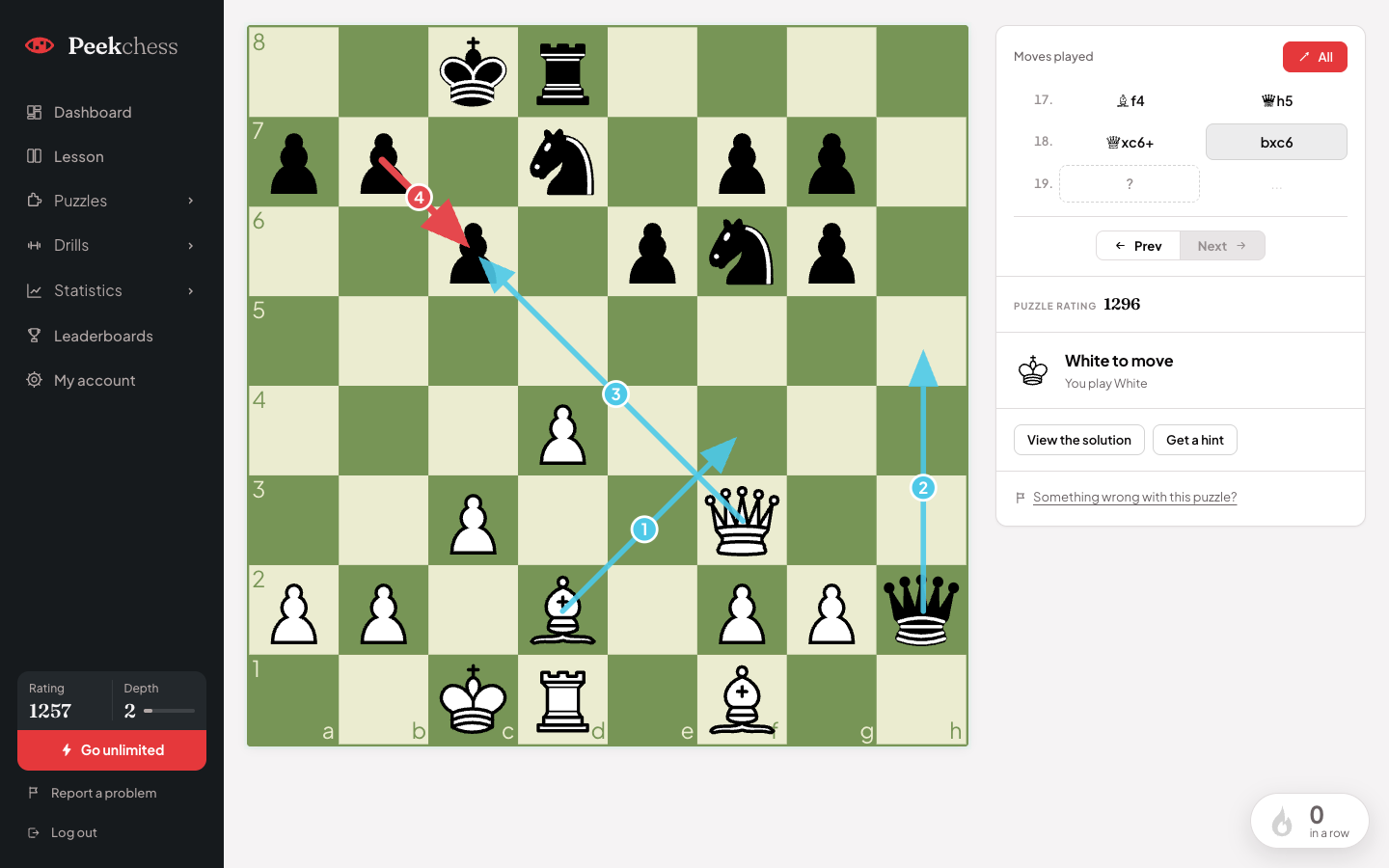
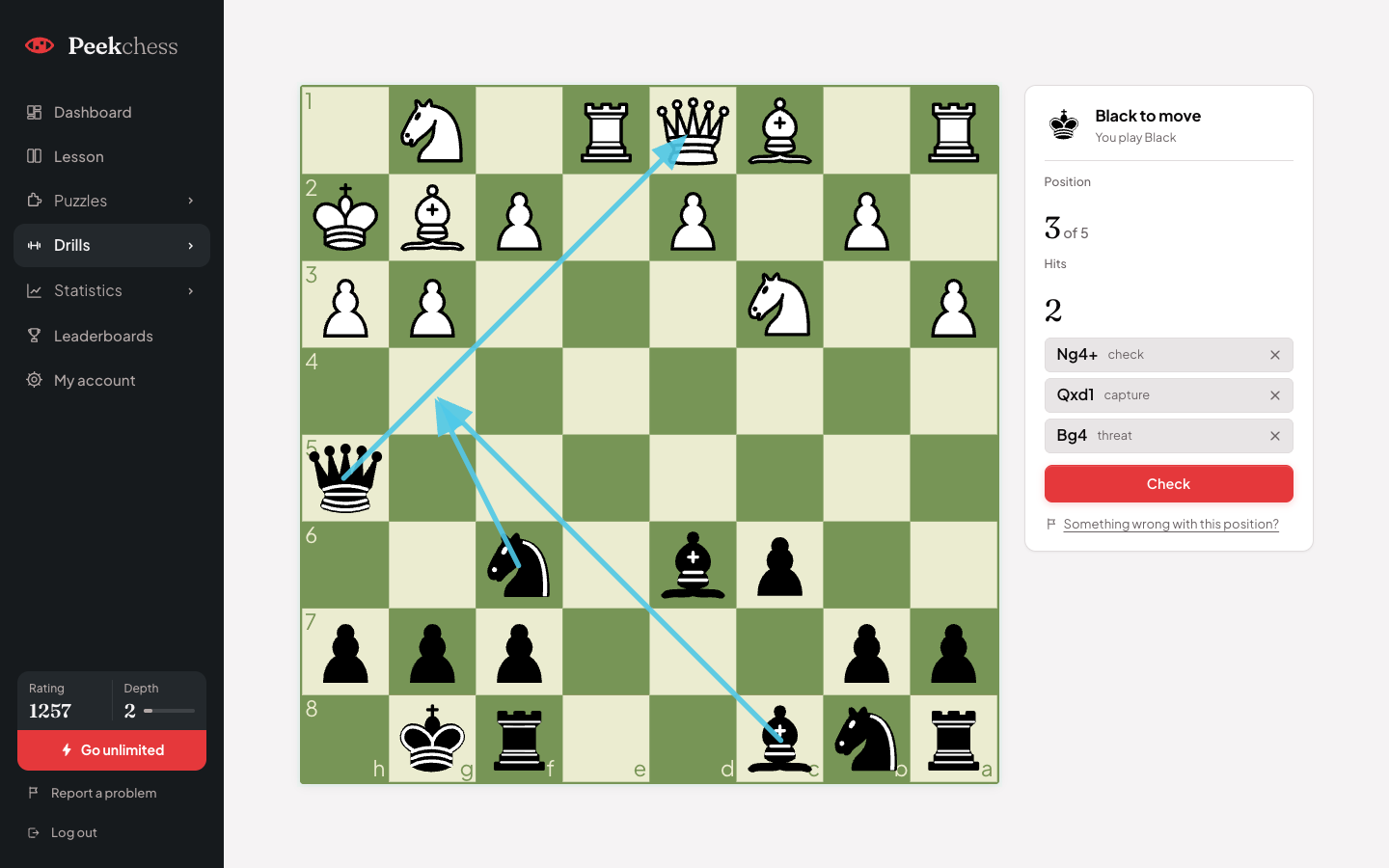
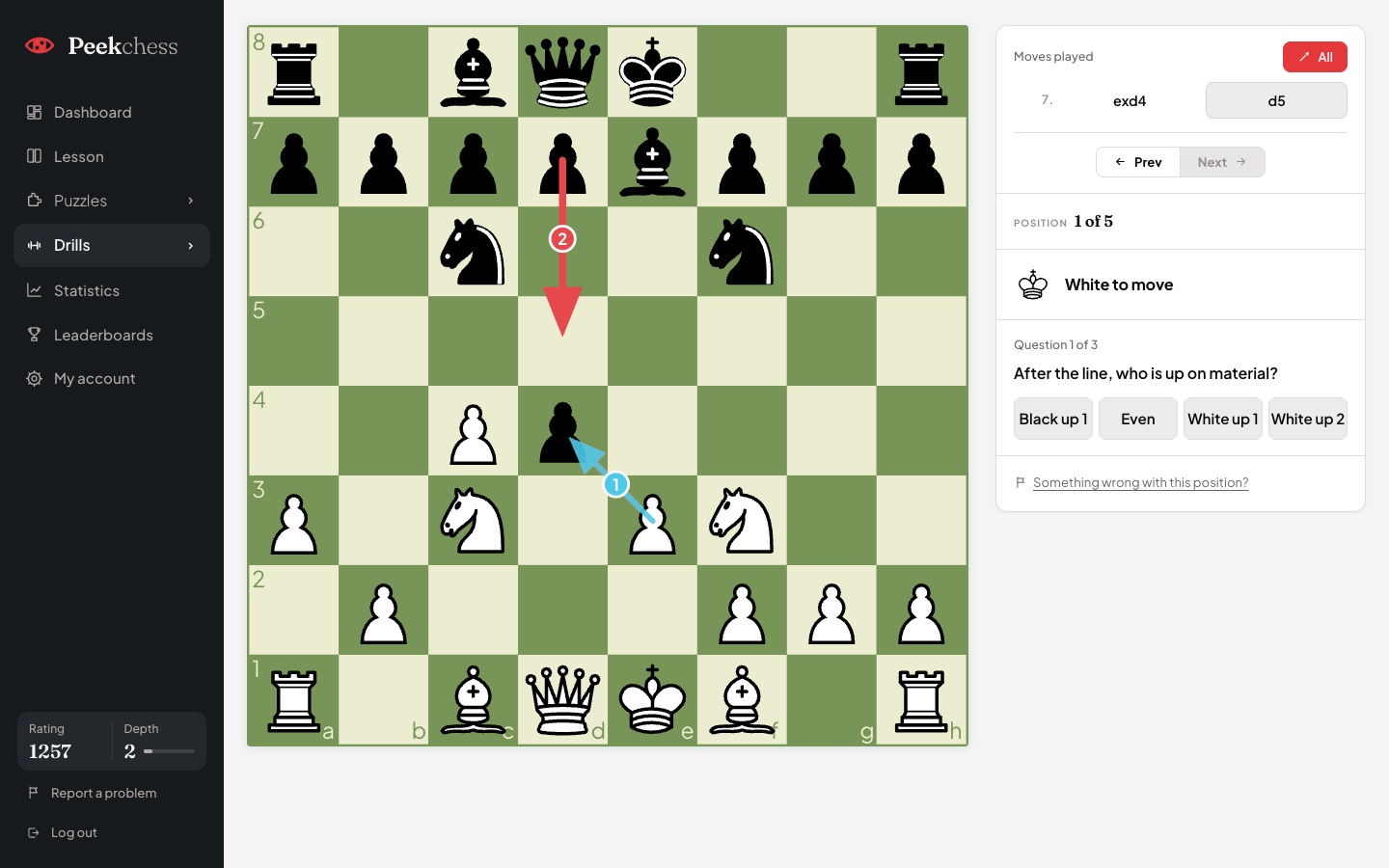
Train it the way a game asks for it, with the real board in front of you, the pieces moving only in your head and one move deeper at a time.
- Start with five chess visualization exercises, each with a version you can do without Peekchess.
- Put them together with the 7-day routine.
- Then solve puzzles where the board doesn't move while you solve.
Peekchess
- You think the whole line through first
- What you train is what a game asks of you
- You see threats coming and punish mistakes

- You get by thinking one move at a time
- The puzzle rating climbs but the games don't change
- You see the blunder one move too late
When my students miss a fork, it's rarely the move itself. They never asked what the knight could reach next. Knowing the pattern is rarely the problem. Seeing where the pieces will be is.
In Peekchess the board stays still, the first moves of each puzzle land as arrows and you find the win in your head. Every puzzle is visualization practice, at a depth that climbs as you solve. See how the method works.
If you're still choosing where to solve puzzles, here are the best chess puzzle apps in 2026.
Read next. 5 chess visualization exercises that carry over to calculation in games, Why you lose track of the pieces in a long calculation and Blindfold chess training is a party trick. Calculation isn't..