Calculate the reply your opponent will actually play

Part of how to calculate in chess is expecting the reply your opponent will actually play, not an engine's. Tactics puzzles don't always train that part of chess calculation. You find the first move, the site says correct, the reply makes no sense, so you click on, finish the line and forget it. That puzzle didn't make you better.
Who defends when you calculate a puzzle?
A puzzle's line is an engine's. The defence is the move that holds out longest, not the one a person would choose.
Usually that's the same move. When it isn't, the puzzle hangs on a reply nobody at your level would find.
What does that look like in a calculation?
- Peekchess
- The puzzle's line
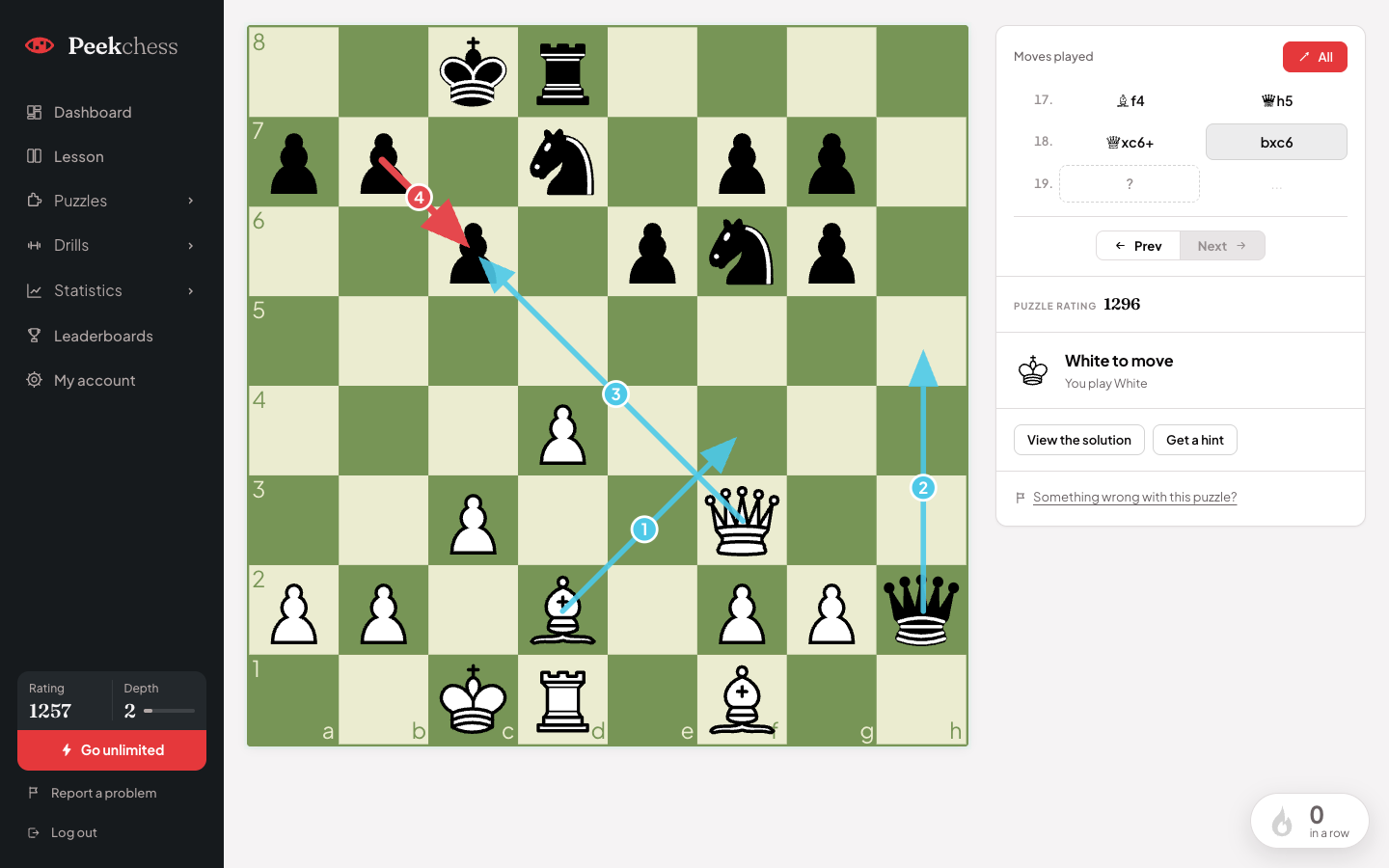
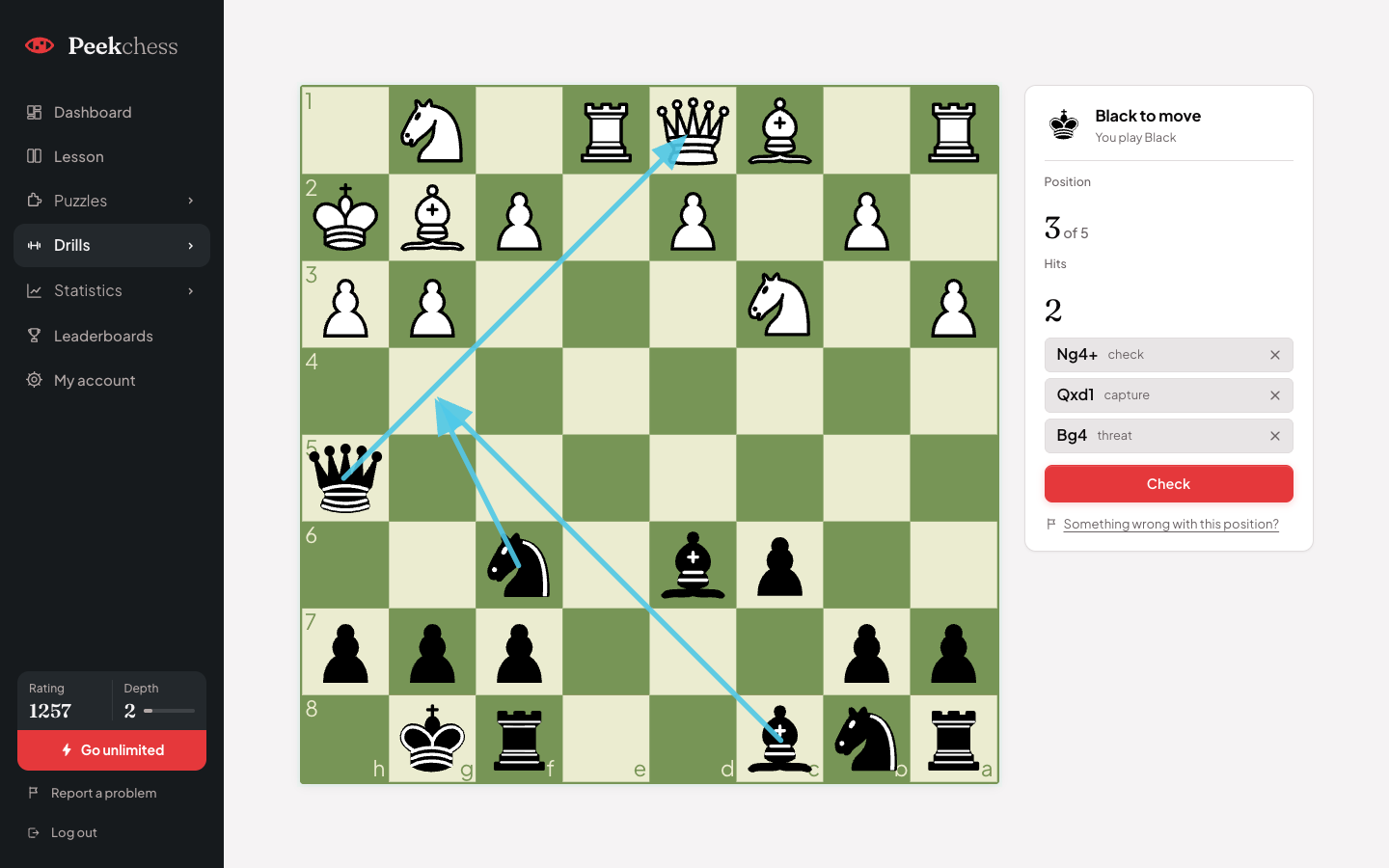
White has just played Rxf7. 98% of players around 1500 simply take back. The puzzle's line expects Bxd4+, an in-between check 0.2% of them would find.
Why does it matter for your chess calculation?
How do you calculate the reply you'll meet?
- 1Before you move, name their most likely reply, not just the best one.
- 2If a reply surprises you, stop and work out why it works.
- 3Can't explain the line in one sentence? Count it as unsolved.
Peekchess checks every reply with Maia 3, a neural network trained on millions of human games, so the reply you face is the one you'd most likely meet at your level. How Puzzles works
If you're still choosing where to solve puzzles, here are the best chess puzzle apps in 2026.
Read next. Why do I keep blundering in chess? What your calculation leaves out, When to stop calculating in chess and Aimchess alternative? Aimchess vs Peekchess for chess calculation.