How to calculate
without moving a piece.
A chess calculation method strong players use before every critical move, in four steps.
30×
Missed tactics lose about thirty times as many games as openings.Calculation is how you stop them. How we measured
- <1200
- 1200
- 1500
- 1800
- 2100+
Chess calculation in 4 steps
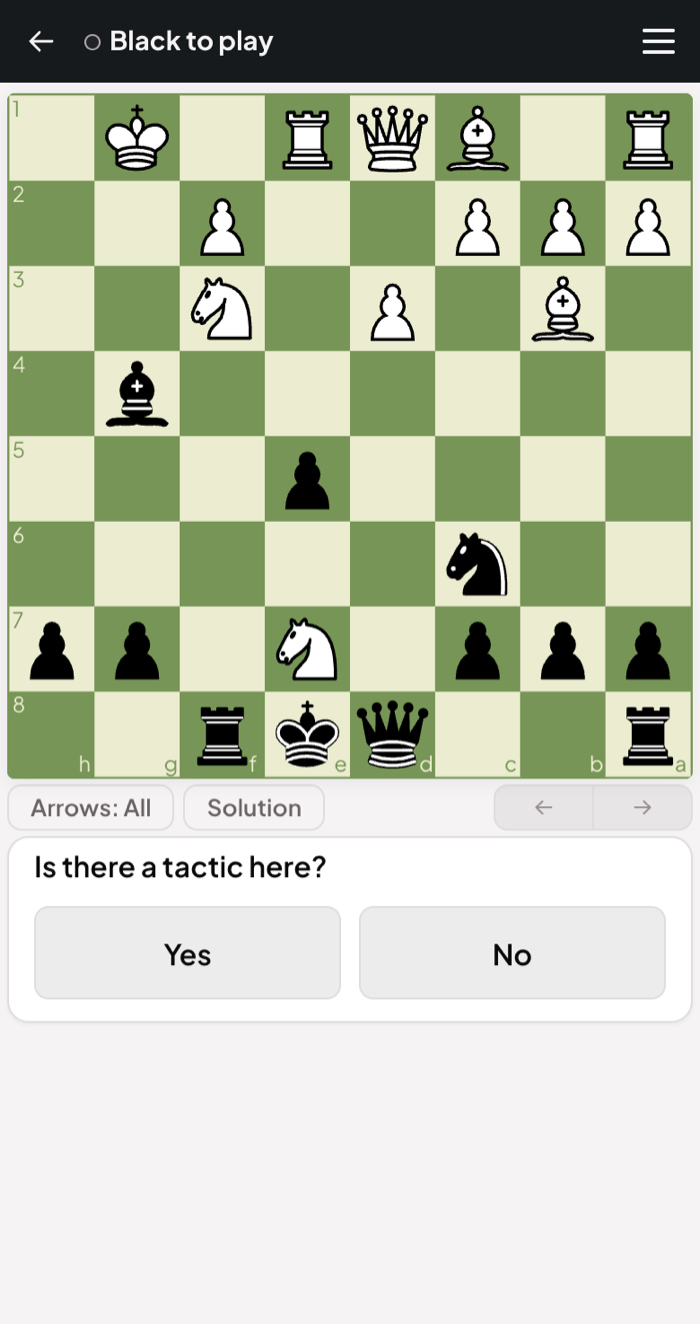
1Is there a tactic?
Loose pieces, an open king, a piece with too many jobs.
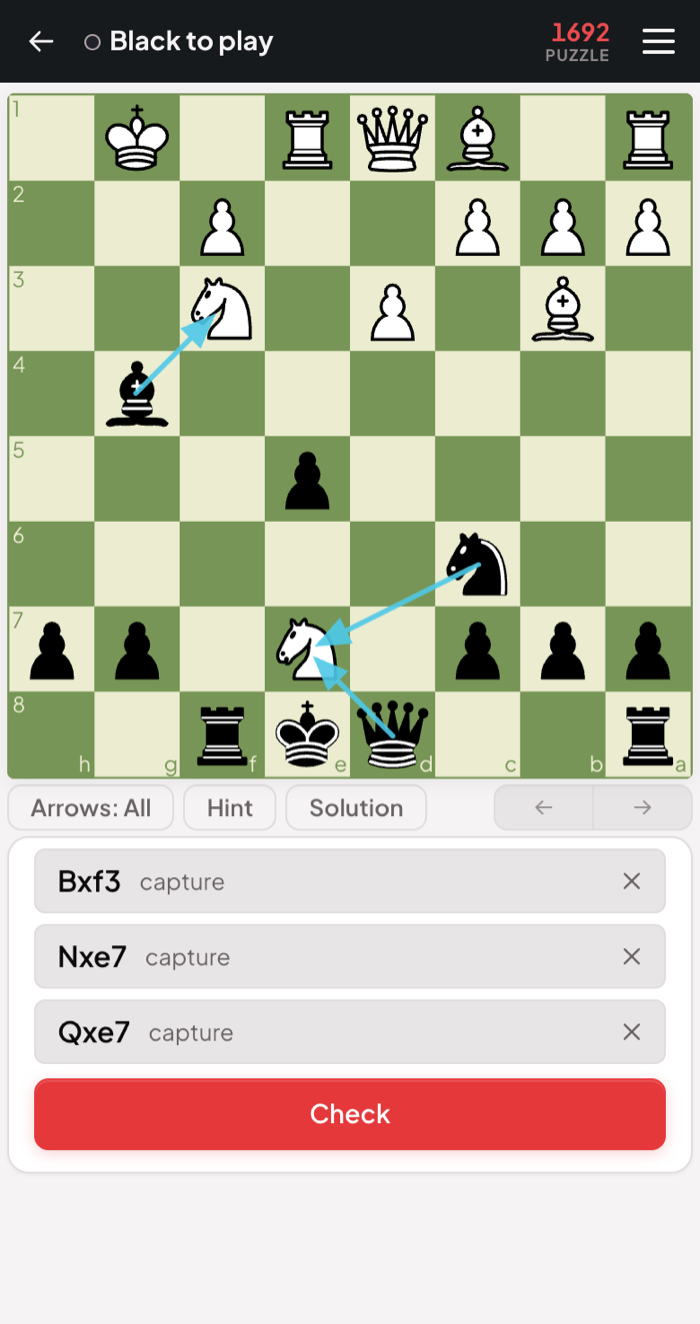
2List forcing moves
Checks, captures and threats. They limit the replies.
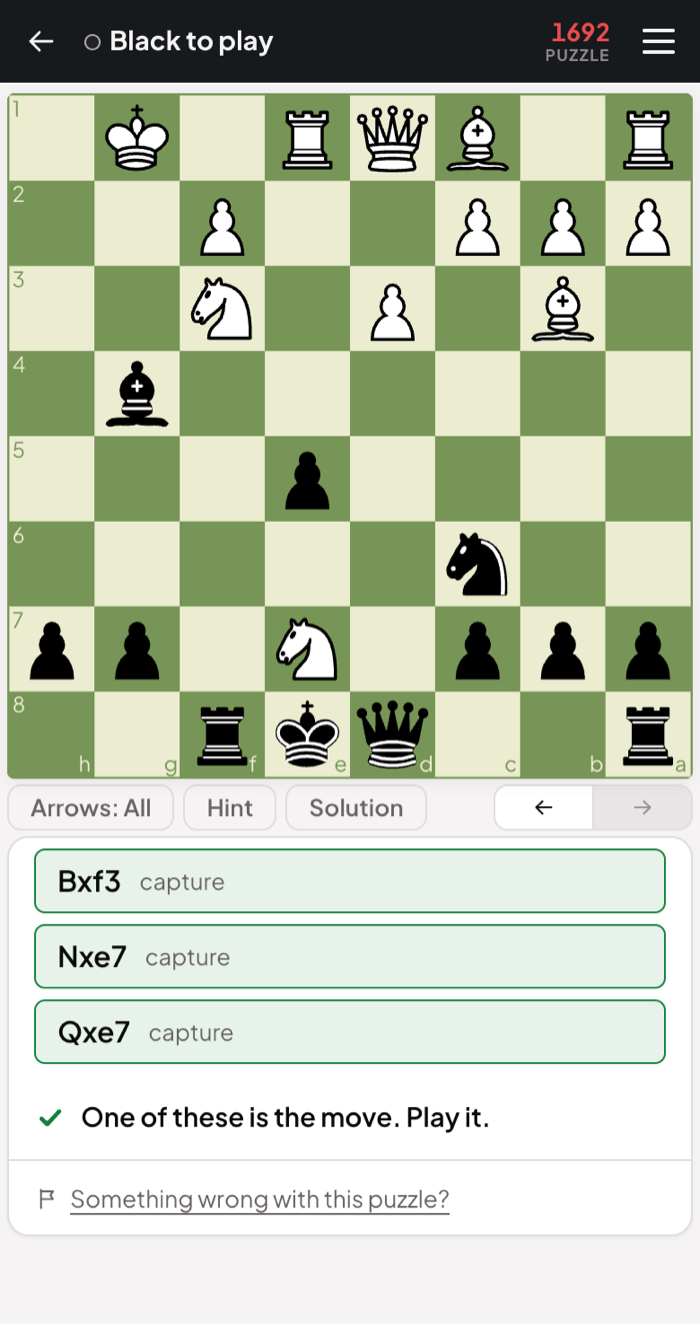
3Calculate each one
Play each one out against their best reply.
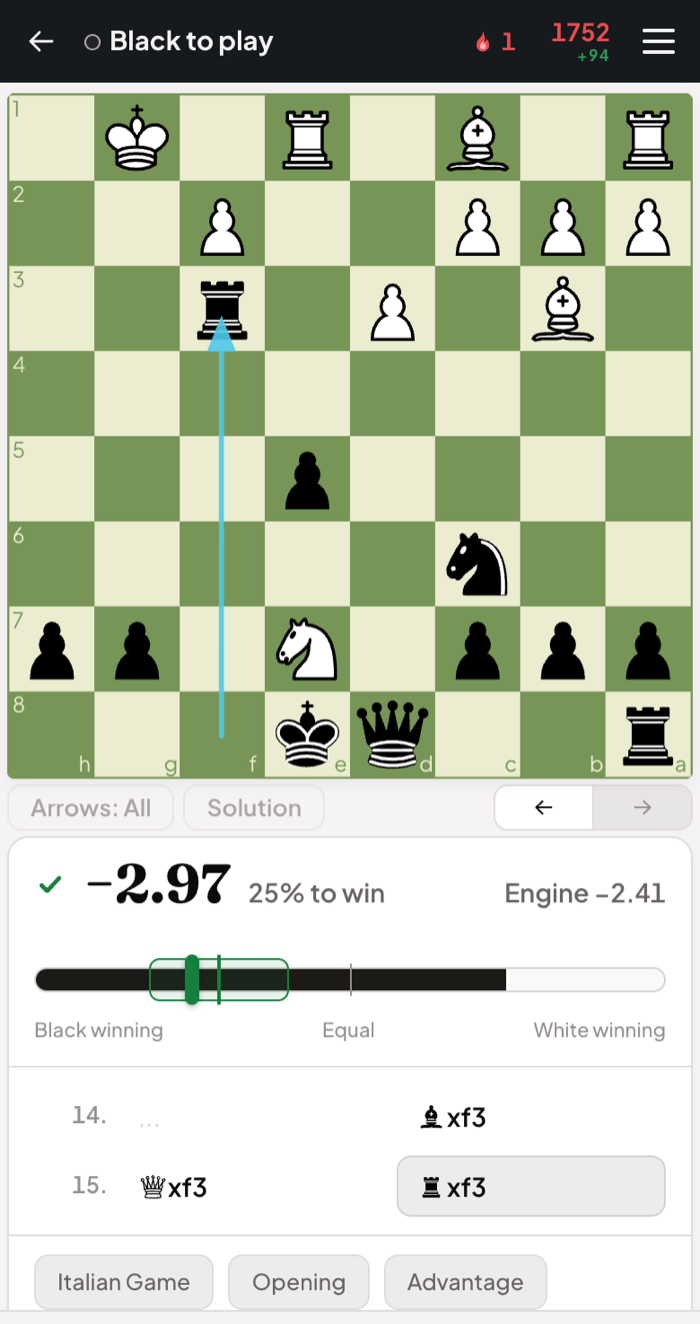
4Evaluate the end
Count material, check the kings, pick the best end.
Six calculation rules that keep a line honest
- 1
Forcing moves first
Checks and captures leave them few answers, so the line stays short.
- 2
Their best reply
Answer every move with their most forcing reply, not the one you hope for.
- 3
Stop when it goes quiet
No checks, captures or threats left? Only then is the line over.
- 4
Hold the board
A piece that moved no longer guards the square it left.
- 5
Compare before you choose
Calculate every candidate move before you pick one.
- 6
Blunder-check your move
Before you play it, ask what their checks, captures and threats are.
Calculate three candidates, play one move
Which one wins? Pick a move, or play it on the board.
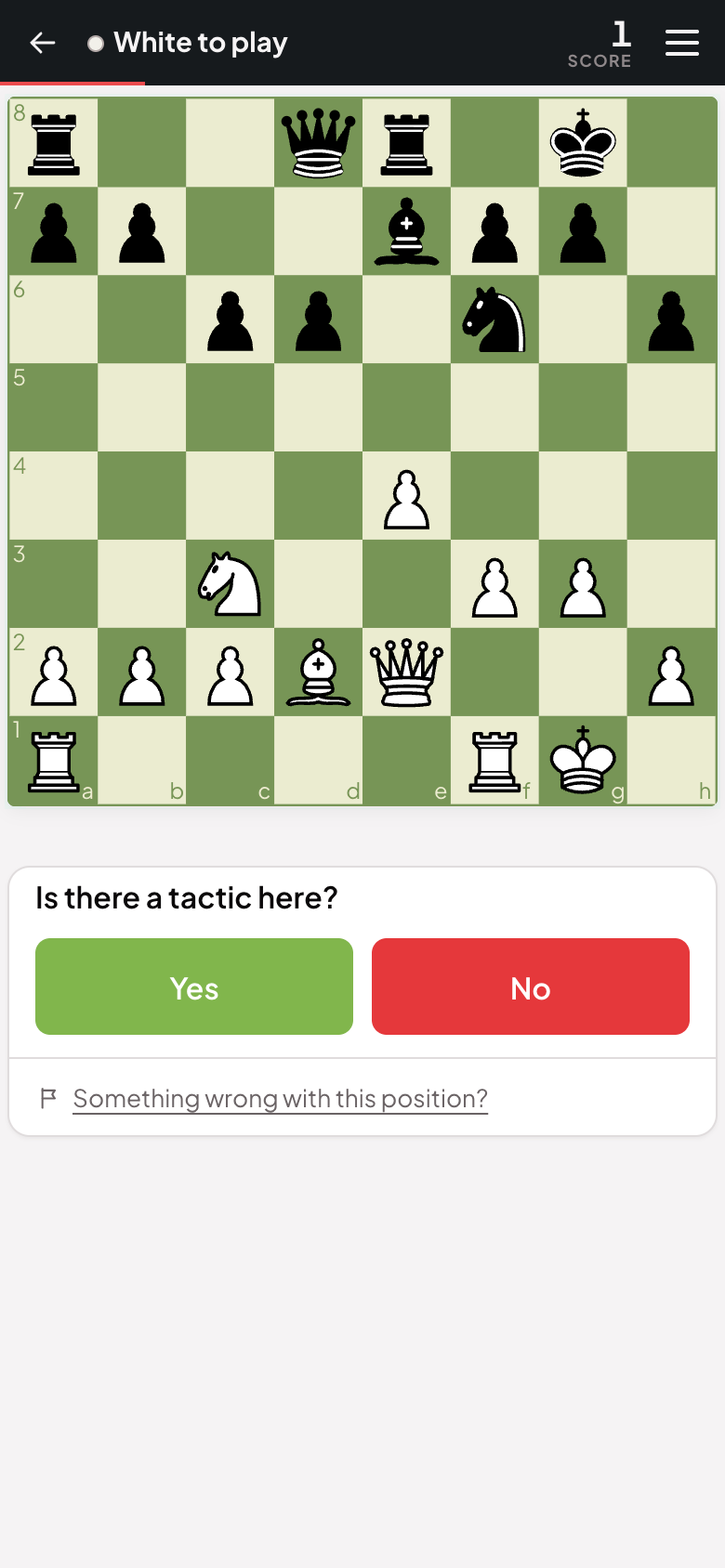
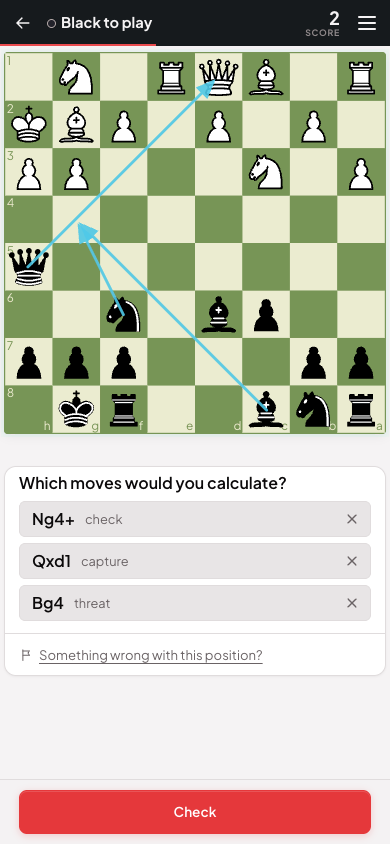
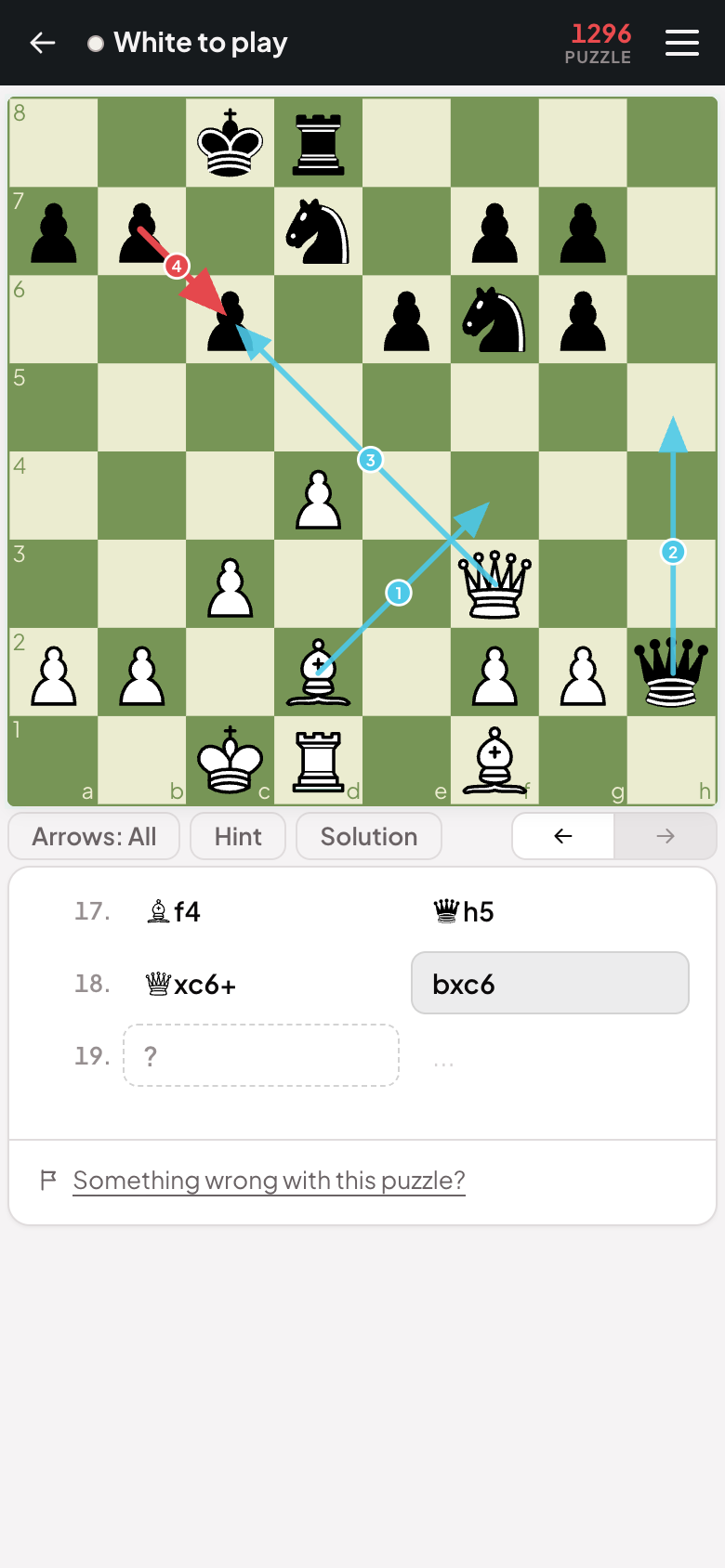
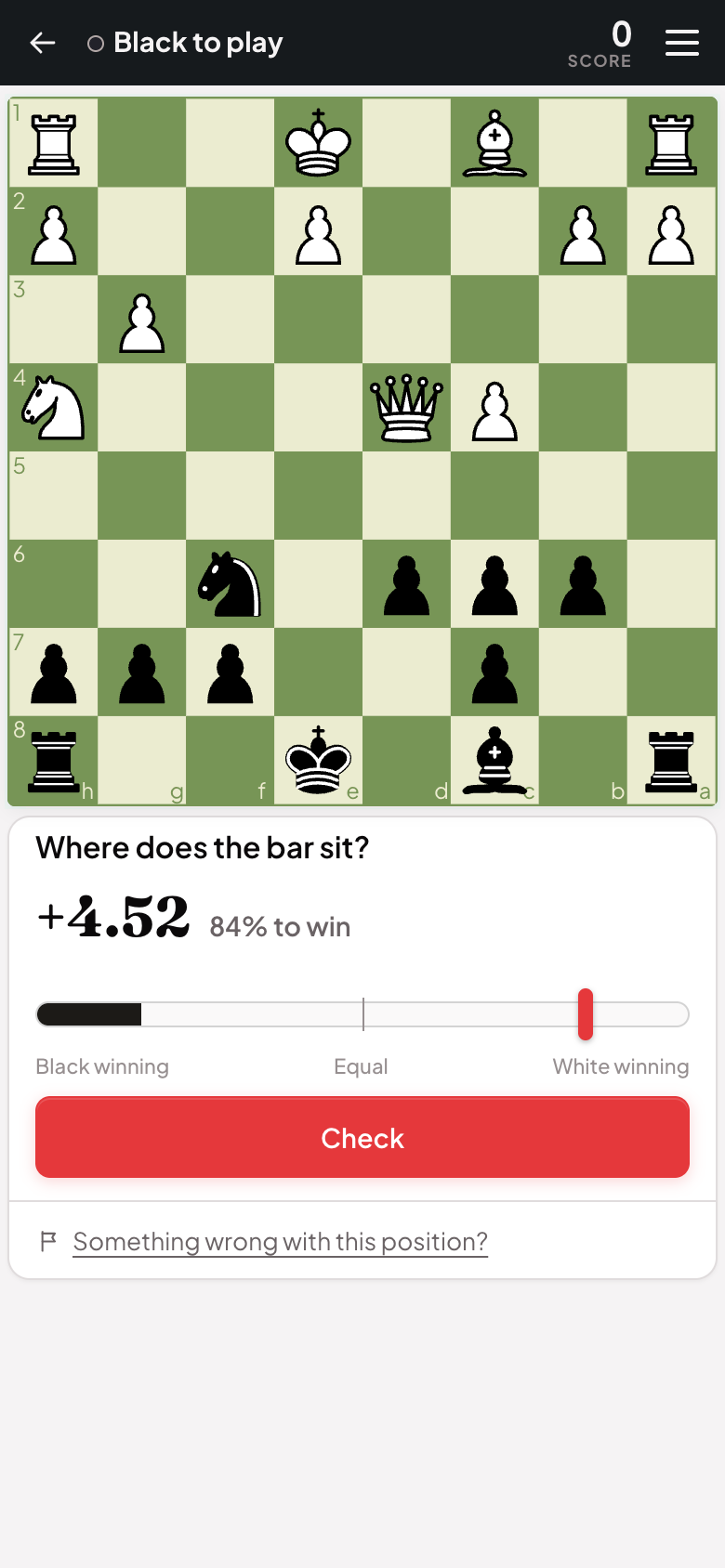
Questions about chess calculation
How far ahead should you calculate in chess?
There’s no fixed number. Calculate as far as the forcing moves go, meaning checks, captures and threats. When none are left and the position is quiet, stop and judge it.
How do I calculate faster?
Know the patterns, and train visualization, which is holding the board in your head.
Why can’t I calculate in chess?
It’s a skill, not a talent. On most puzzle sites the pieces move as you solve, so you can go one move at a time. Train with the board still, and a little every day builds it.
Full calculation mode takes one position through four steps (tactic, candidate moves, calculation, evaluation). You can calculate just the main line or the whole calculation tree, and every line is checked at the end.
Train calculation the way you’ll use it
In our count of 50,000 online games, 61 of every 100 losses turned on a tactic.
Start free