Position evaluation is the last step of calculation
Say how the position stands where the line ends, which is the last step of chess calculation.
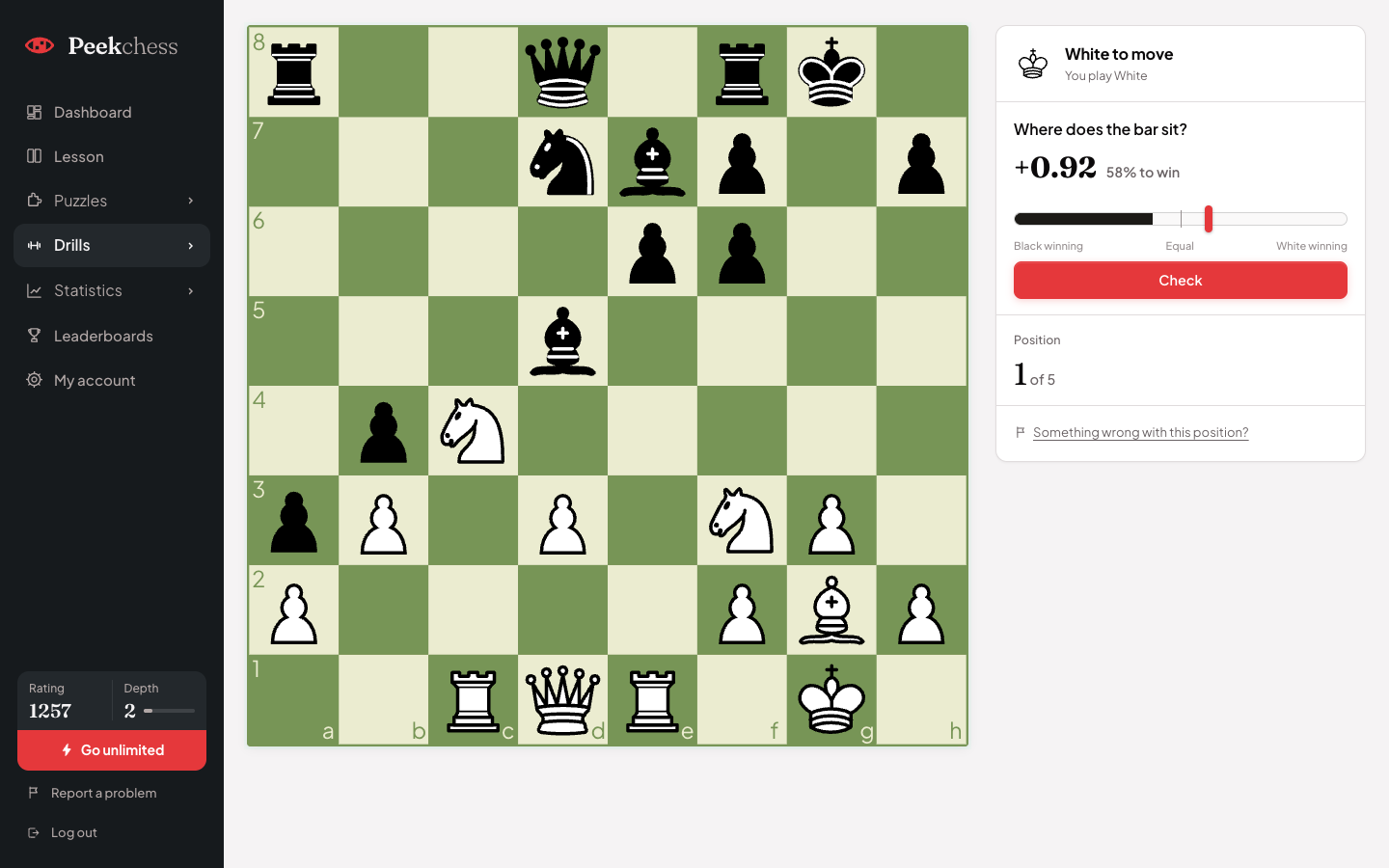
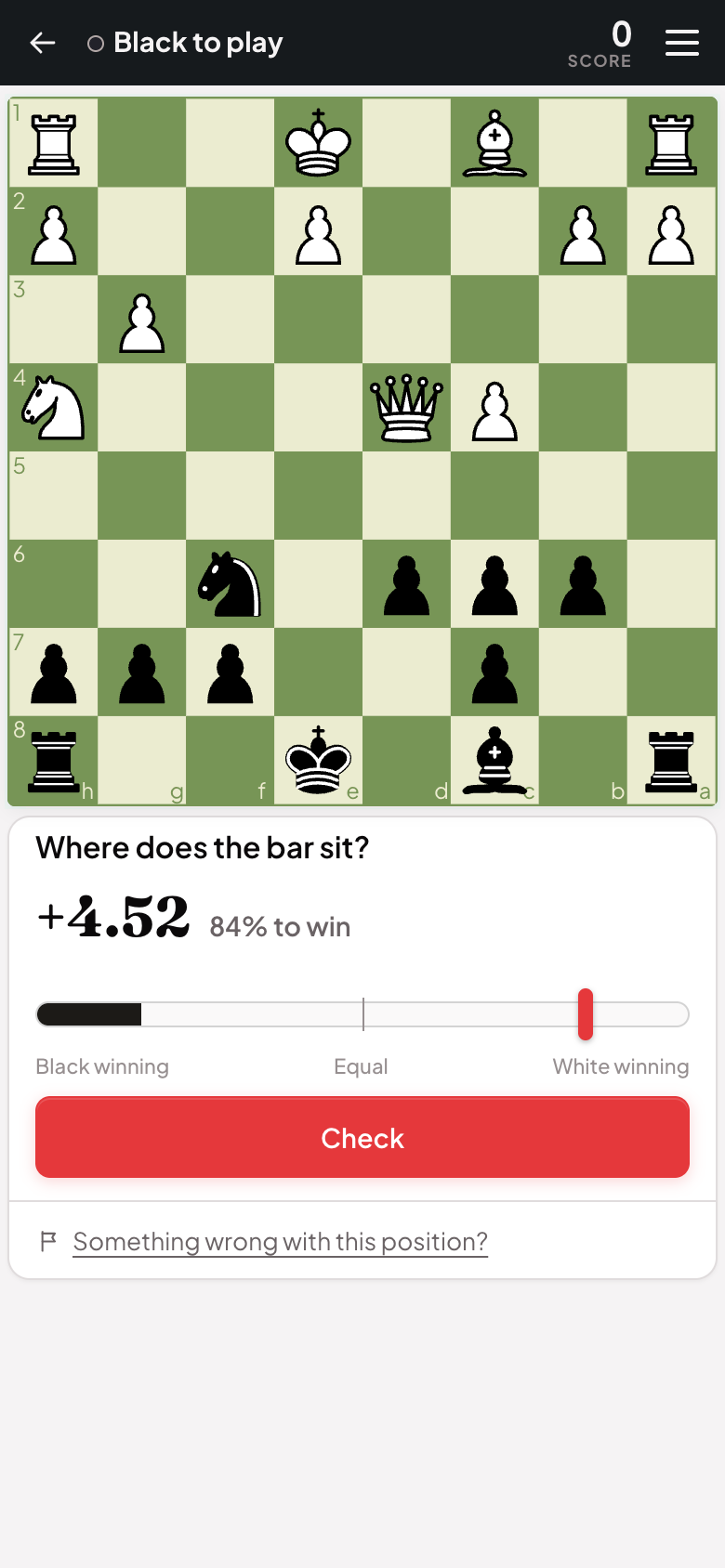
How does Evaluation end a calculation?
- 1
See where the line ends
The final position of a line.
- 2
Set the bar
Who is better, and by how much.
- 3
Check the engine
Inside your band, or not.
What part of calculation does Evaluation train?
Calculating a line is half the job. At the end you have to know whether it is good.
Evaluation trains that last step, so you can tell a winning line from one that only looks good.
What does this calculation training cost?
Free, with no daily limit. It doesn’t count toward your 10 a day.
What do players ask about Evaluation and calculation?
When should I stop calculating?
There’s no fixed number. Follow the forcing moves until the position is quiet enough to judge. Judging it is what this drill trains.
What is the band?
How close to the engine you must be. It adapts as you improve.
Is it rated?
No.
How does it fit with the rest?
It is step 4 of Full calculation mode.
Which other calculation and visualization modes are there?
See all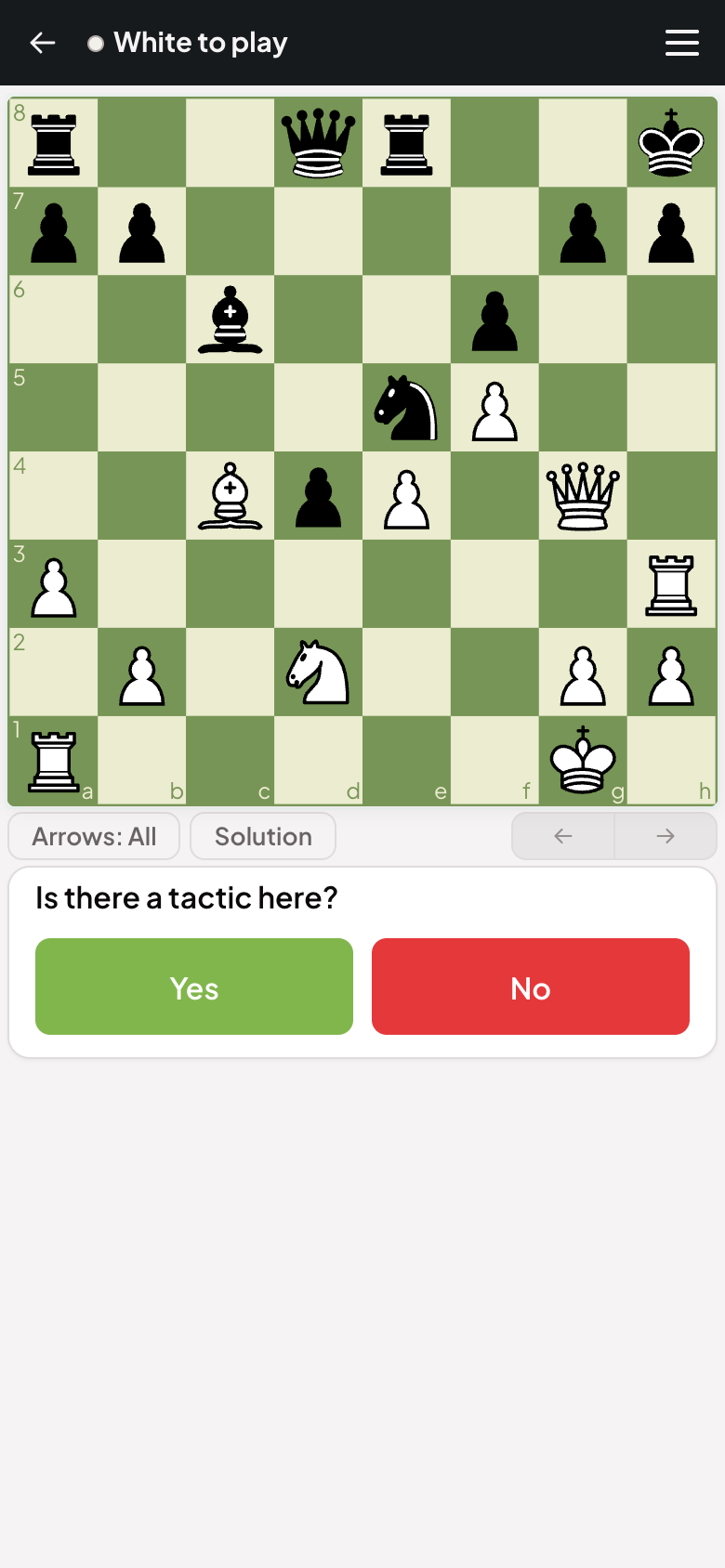
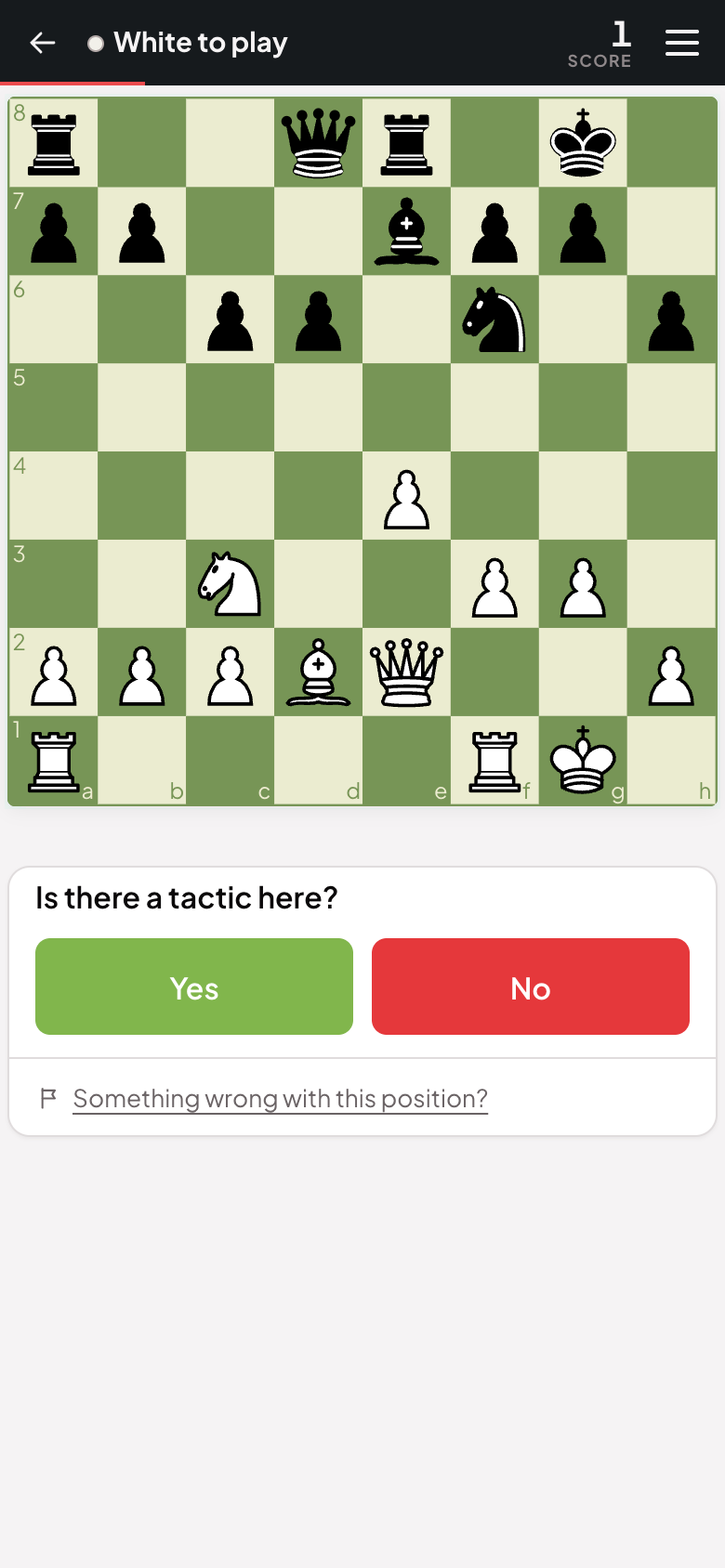
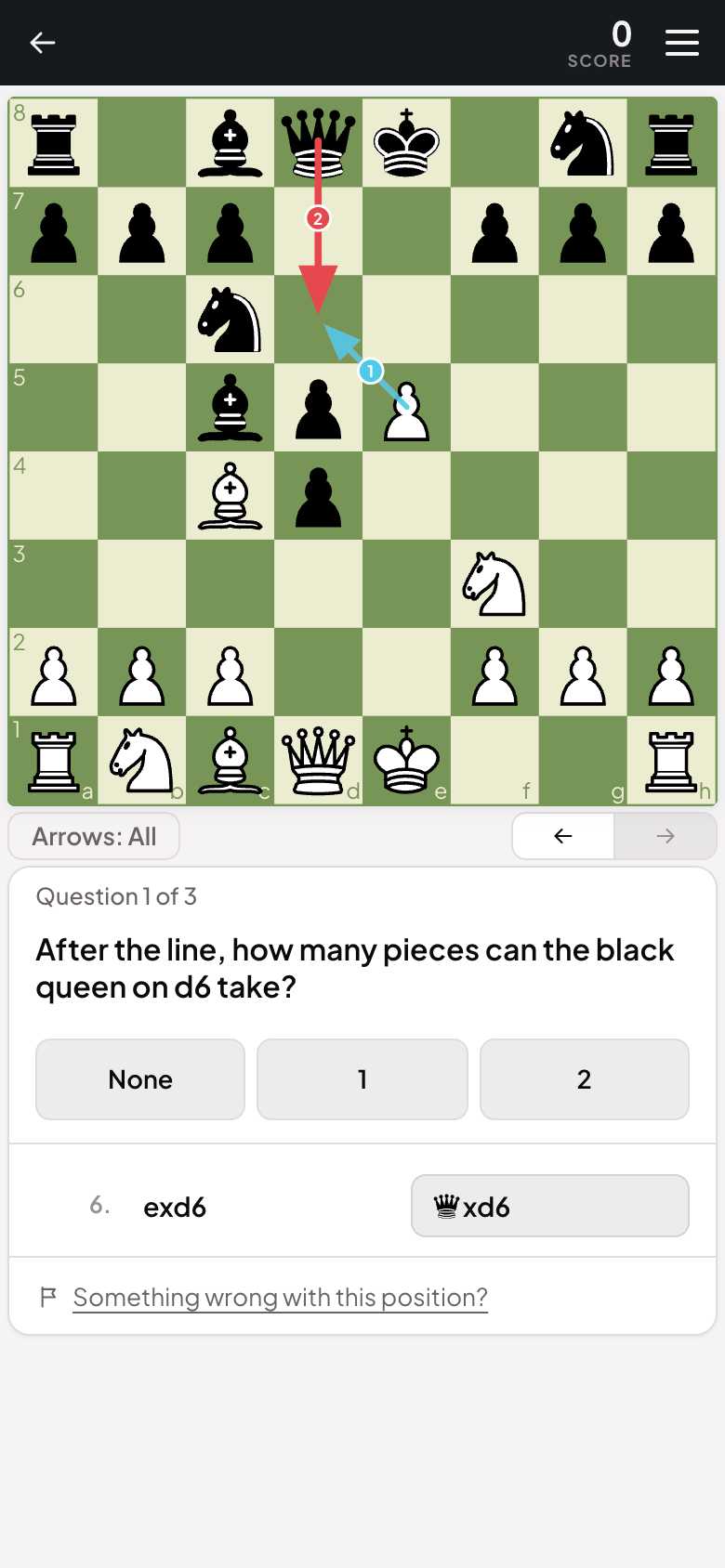
Full calculation mode takes one position through four steps (tactic, candidate moves, calculation, evaluation). You can calculate just the main line or the whole calculation tree, and every line is checked at the end.
Stop losing games to moves you didn’t calculate.
In our count of 50,000 online games, 61 of every 100 losses turned on a tactic.
Start free