Keep track of a line to calculate deeper
Play a line in your head, then answer about where it leaves you. That picture is what chess calculation runs on.
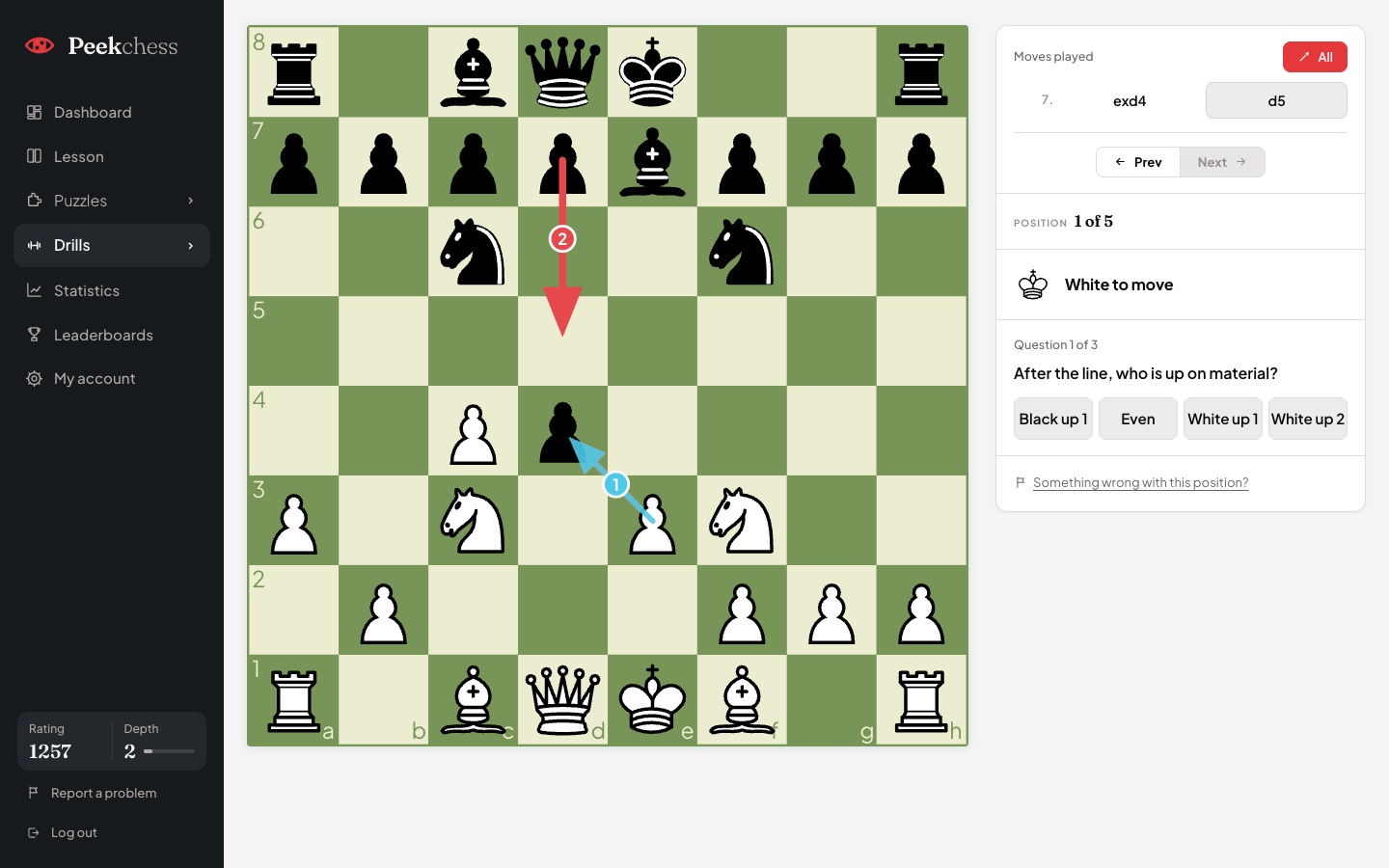
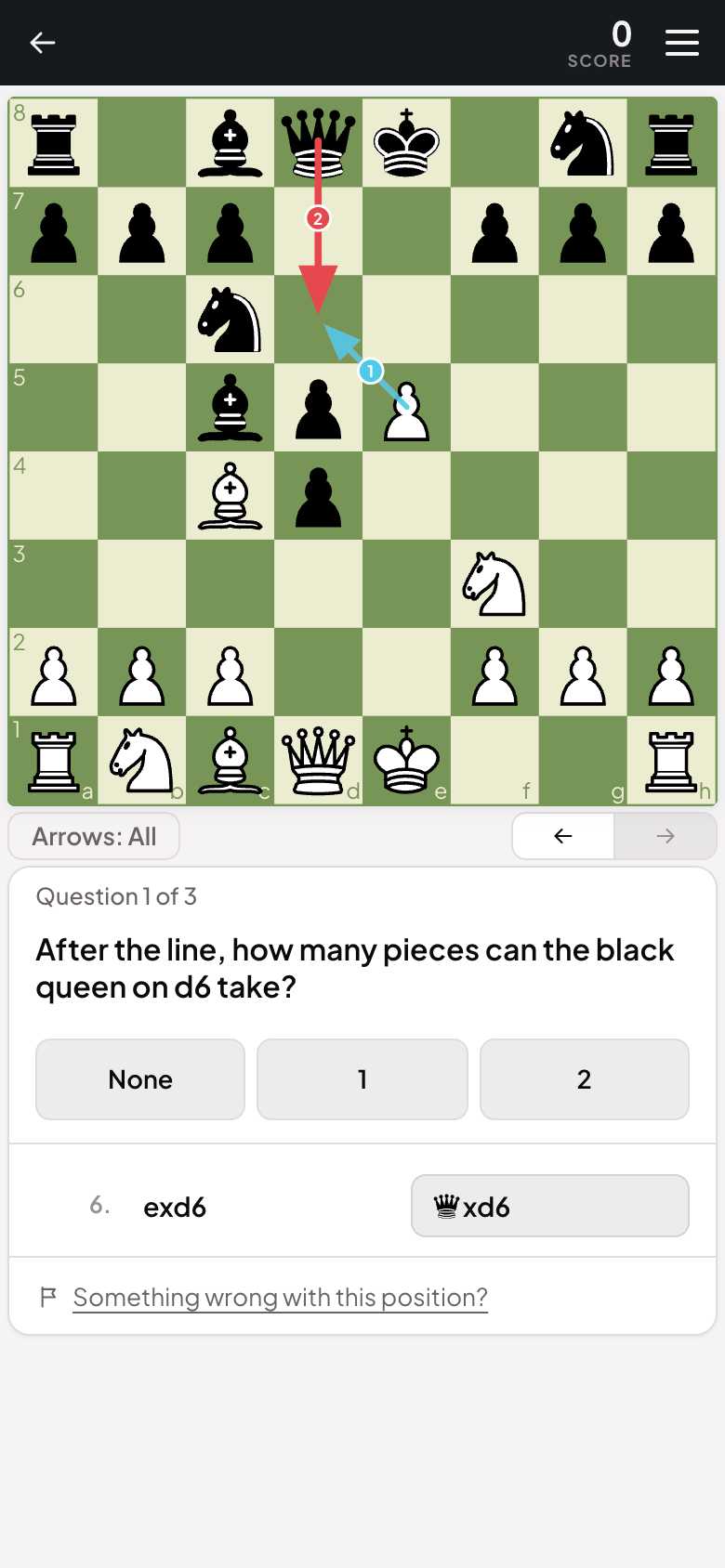
How does Keeping track help you calculate?
- 1
Read the line
A stretch of a real game.
- 2
Hold the board
It changes only in your head.
- 3
Answer three questions
What can be taken, what attacks what.
What part of calculation does Keeping track train?
Most calculation errors come from losing the picture, such as a piece you thought was gone or a line you thought was closed.
Keeping track trains that picture, one move deeper at a time.
What does this calculation training cost?
Free, with no daily limit. It doesn’t count toward your 10 a day.
What do players ask about Keeping track and calculation?
Is this blindfold chess?
No. You see the starting position. You only hold the changes.
How do I keep track of a longer line when I calculate?
Do short chess visualization exercises, one move deeper at a time. Here you set the depth, from 2 to 12 moves, and hold only the changes.
What do the questions ask?
Checks, captures, attacks, pins and material in the final position.
Can I watch the moves?
Yes. Arrows can play the line for you.
Which other calculation and visualization modes are there?
See all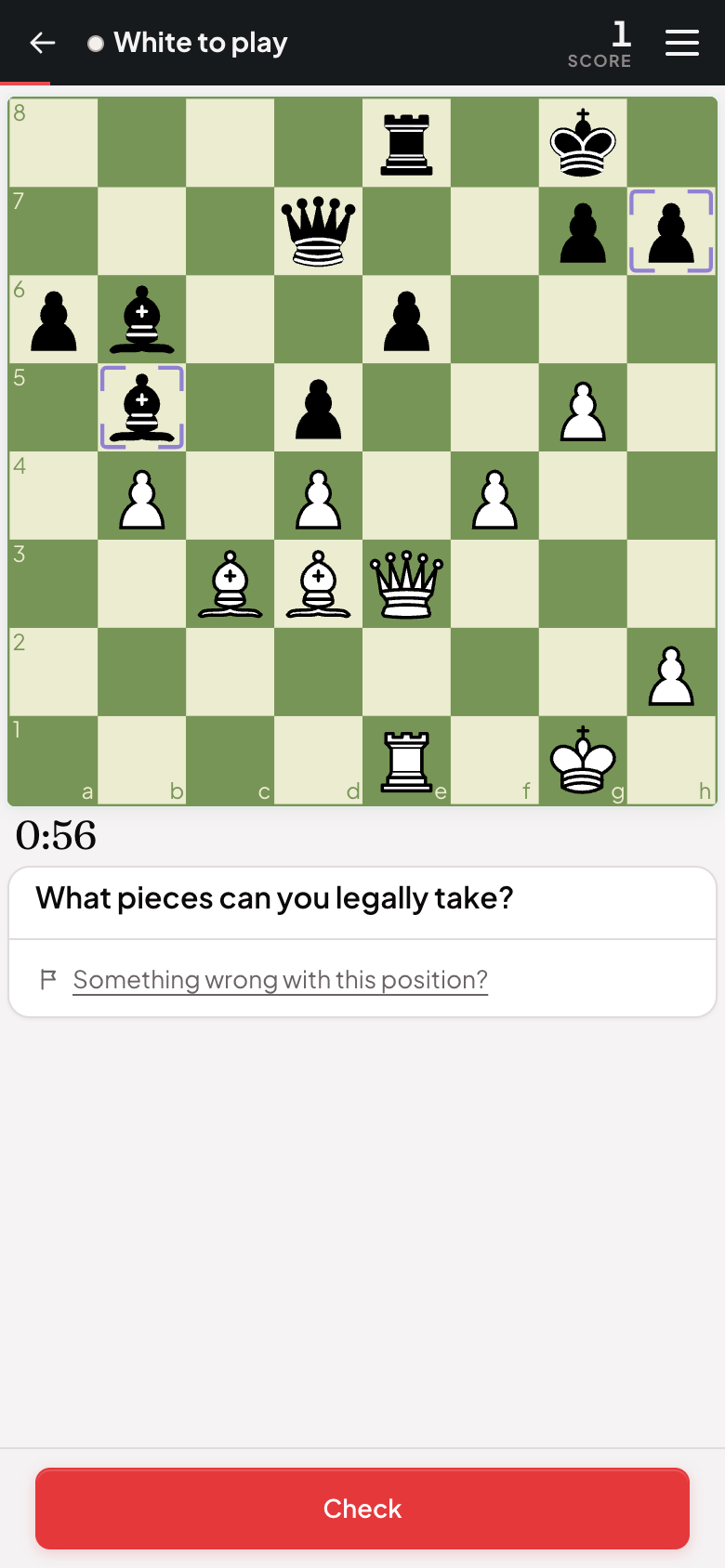
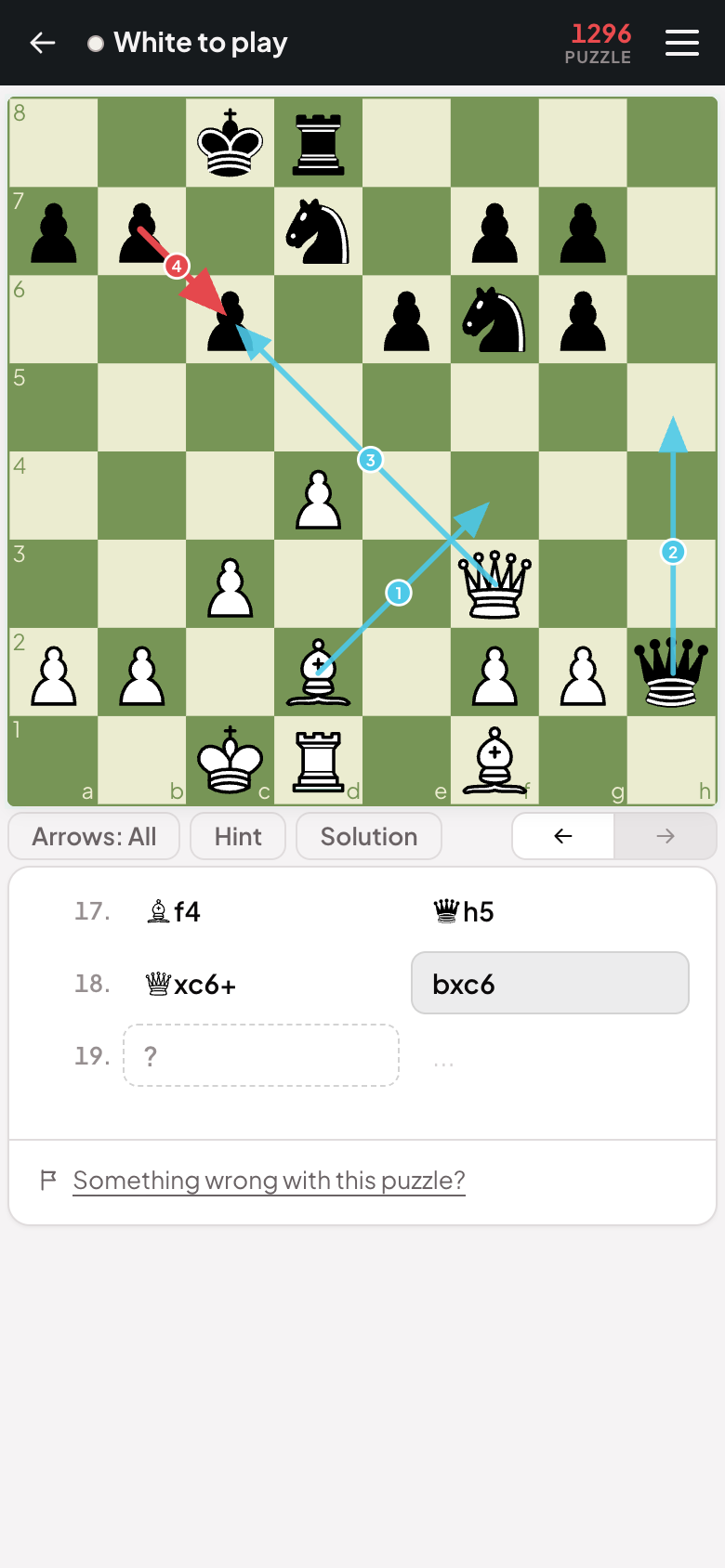
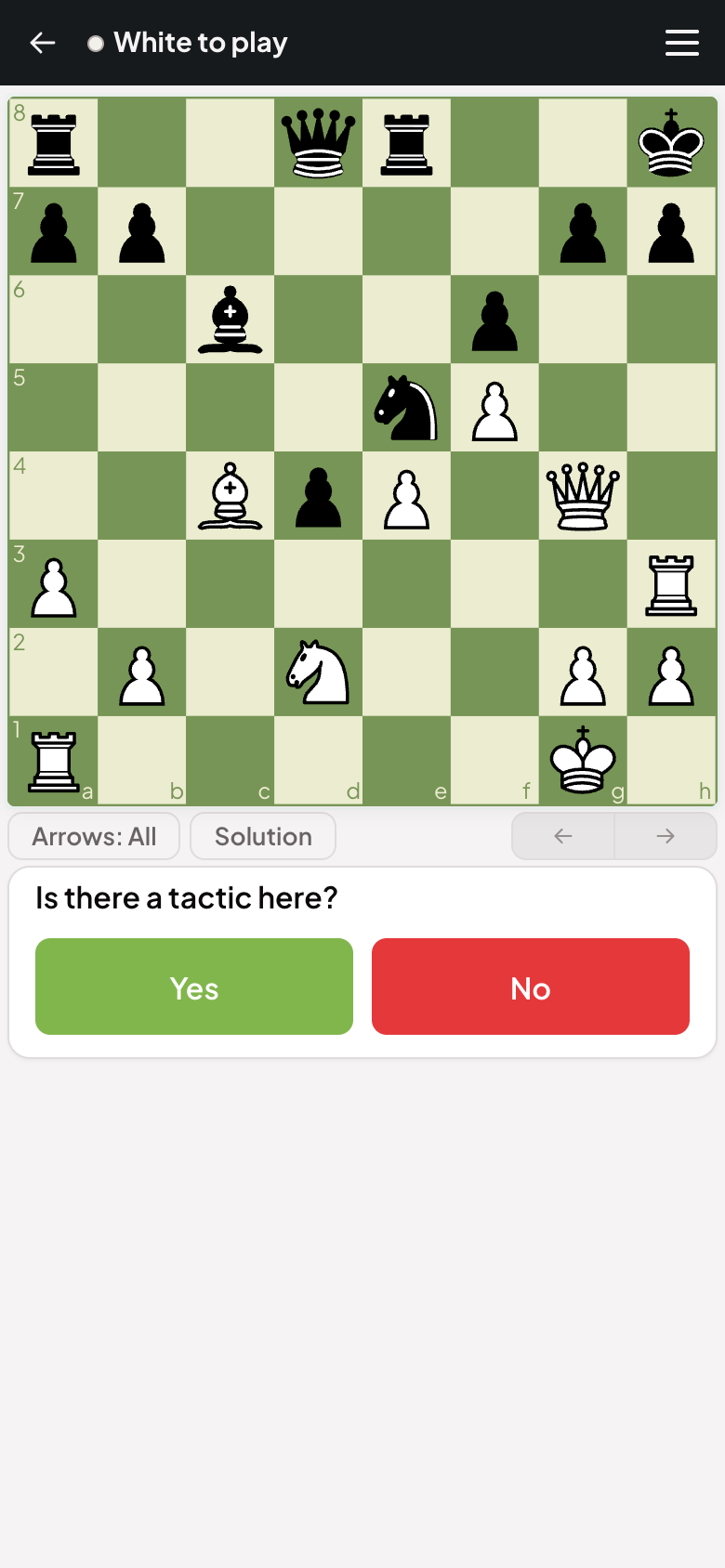
Full calculation mode takes one position through four steps (tactic, candidate moves, calculation, evaluation). You can calculate just the main line or the whole calculation tree, and every line is checked at the end.
Stop losing games to moves you didn’t calculate.
In our count of 50,000 online games, 61 of every 100 losses turned on a tactic.
Start free